Community & Civic Panels: Why Every Voice Matters

Educational & Training Panels: Why Learning Requires More Than Information
September 1, 2026
Cultural & Literary Panels: Why Perspective Matters More Than Conclusions
September 15, 2026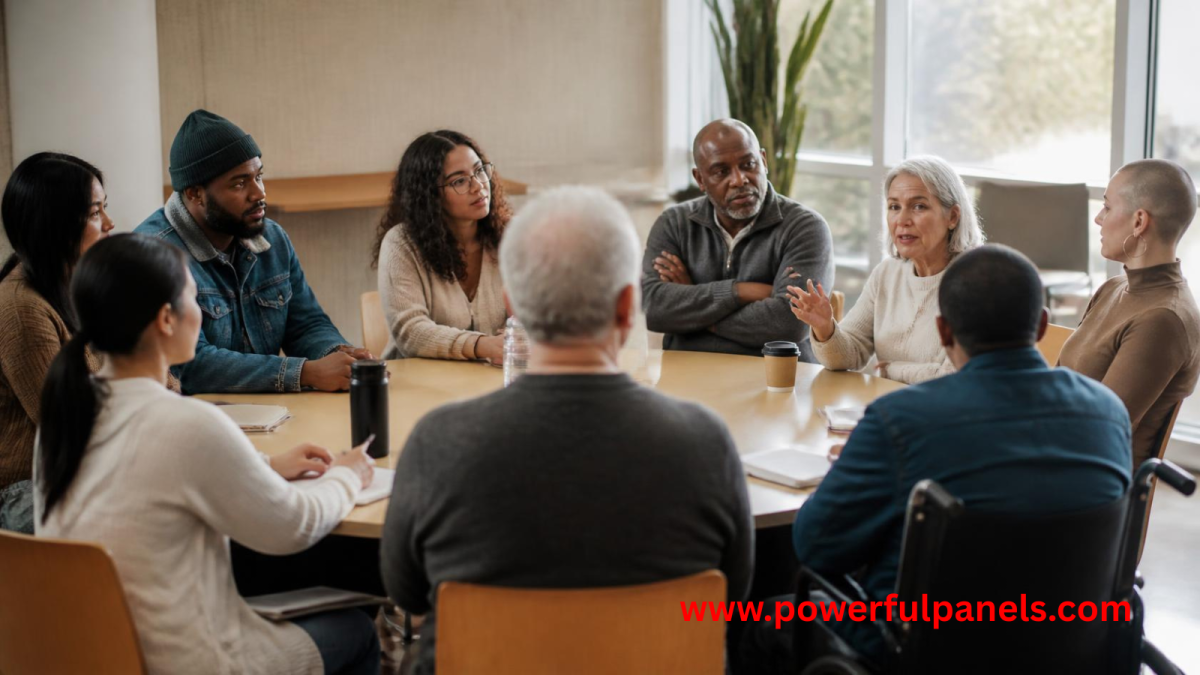
Panel Genres Series | 10 of 15
Community & Civic Panels are different from almost every other panel genre. Why? Because the audience isn’t simply there to learn. They’re there because they care. And sometimes, they care deeply.
The topic may be a new development, a school referendum, public safety, housing, transportation, economic development, or the future of the community itself. People arrive with opinions, experiences, concerns, and often with their emotions.
That’s why moderating a Community & Civic Panel requires more than good questions. It requires creating a conversation where people believe their voices matter.
You’ll Commonly Find This Genre At…
- Town halls
- Neighborhood forums
- Community planning meetings
- Library programs
- School board discussions
- Civic association meetings
- Public engagement forums
Think…
- City council community forums
- Planning commission meetings
- Visioning workshops
- Community listening sessions
- Local civic leadership forums
If you’re moderating one of these panels, your audience wants a conversation where every voice has the opportunity to be heard. The quality of the process is often just as important as the outcome.
What Matters Most: Inclusion
Community audiences want to know they have been heard. That doesn’t mean everyone expects to agree…or even to get their way. But they do expect a fair process:
- They want different perspectives represented.
- They want respectful dialogue.
- And they want confidence that every voice has an opportunity to contribute.
Inclusion isn’t simply about who sits on the stage. It is about whose experiences become part of the conversation.
Success Looks Like…
A successful Community & Civic Panel sounds like this: “Even though we disagreed, everyone had a chance to be heard,” or “I understand the different perspectives much better now,” or “That felt like a real conversation.”
Success isn’t measured by consensus. It is measured by participation, understanding, and trust in the process. People may leave with different opinions, and they should never leave feeling ignored.
Moderator Superpower: Community Building
The moderator’s greatest superpower for a community or civic panel is community building. That means creating an environment where people feel respected, even when they disagree.
- A skilled moderator encourages quieter voices to participate.
- Keeps dominant personalities from taking over.
- Helps people respond to ideas rather than attack individuals.
- Finds moments of common ground without forcing agreement.
Community building isn’t about making everyone happy. It is about making everyone feel included.
The Biggest Pitfall: Letting the Loudest Voices Dominate
Every community has passionate advocates. That’s healthy, but if a few individuals dominate the discussion, everyone else begins to disengage. The audience quickly concludes that participation doesn’t matter.
A moderator must intentionally create balance. That may mean inviting quieter panelists into the conversation, limiting repetitive comments, or gently redirecting the discussion when it becomes personal or unproductive.
Fairness is often more important than speed.
How to Design a Better Community Panel
- Invite panelists who represent genuinely different perspectives.
- Establish expectations for respectful dialogue before the discussion begins.
- Build in opportunities for audience participation.
- Use questions that encourage understanding instead of debate.
- Summarize areas of agreement as well as areas where differences remain.
Remember that the goal is not to eliminate disagreement. It is about elevating those areas of disagreement into a productive conversation.
The Moderator’s Playbook
Before moderating a Community & Civic Panel, ask yourself:
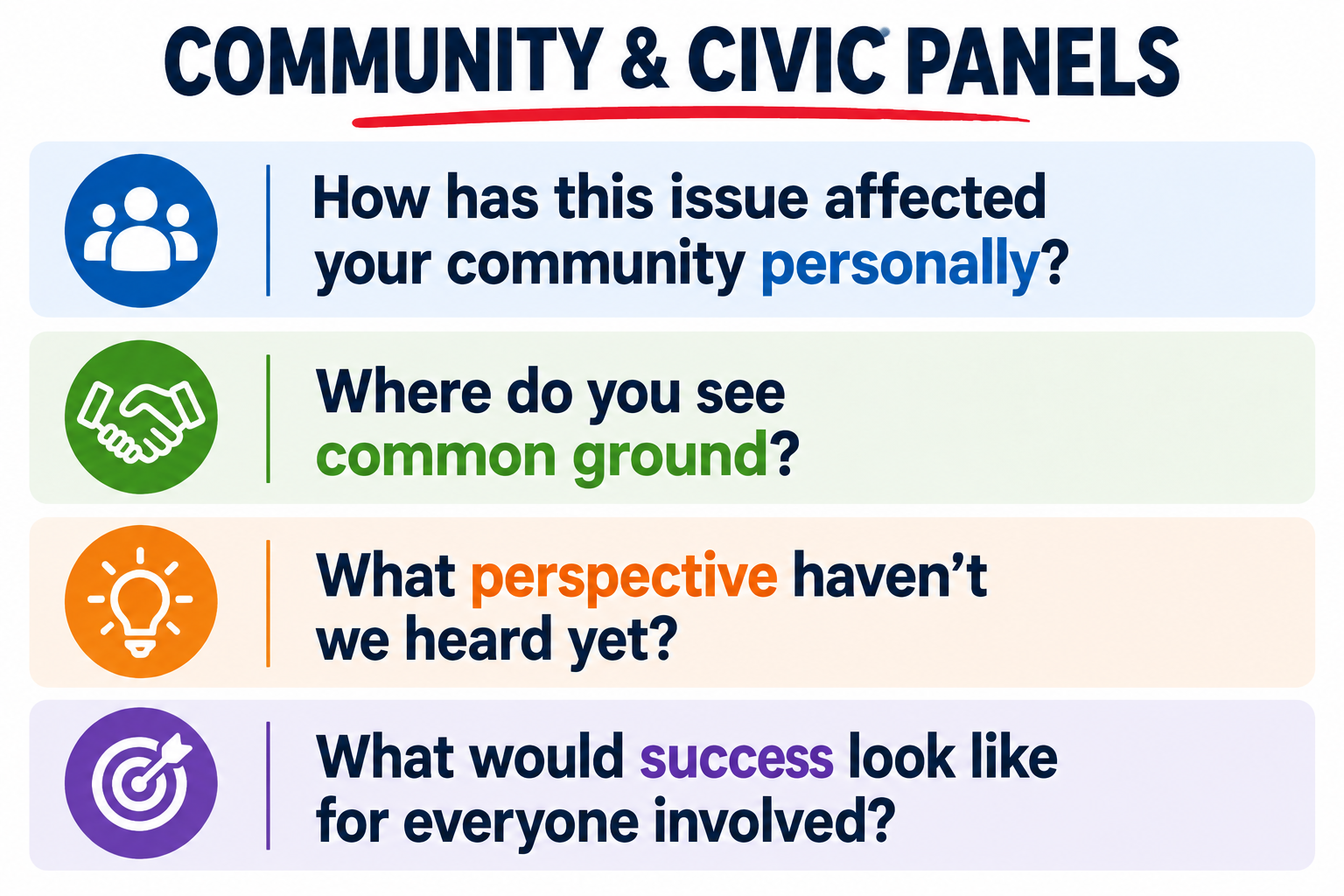
- Whose voice absolutely needs to be represented?
- How will I ensure everyone has an opportunity to contribute?
- What ground rules will help create respectful dialogue?
- How will I redirect personal attacks toward productive conversation?
- What can I do to help people leave feeling heard, even if they disagree?
Community & Civic Panels don’t succeed because everyone reaches consensus. They succeed because people trust and engage in the conversation. When moderators create an environment where every voice is respected, and every perspective has an opportunity to be heard, they strengthen more than the discussion. They strengthen the community itself.
Next in the Panel Genres Series: Advocacy & Activism Panels: Why Purpose Drives the Conversation.
Related Articles:
The 15 Genres of Panel Discussions
Educational & Training Panels: Why Learning Requires More Than Information
Powerful Panels Top 10 Trending Topics for Panel Discussions – Q3 2026